Corporate Governance Manual 2025

0

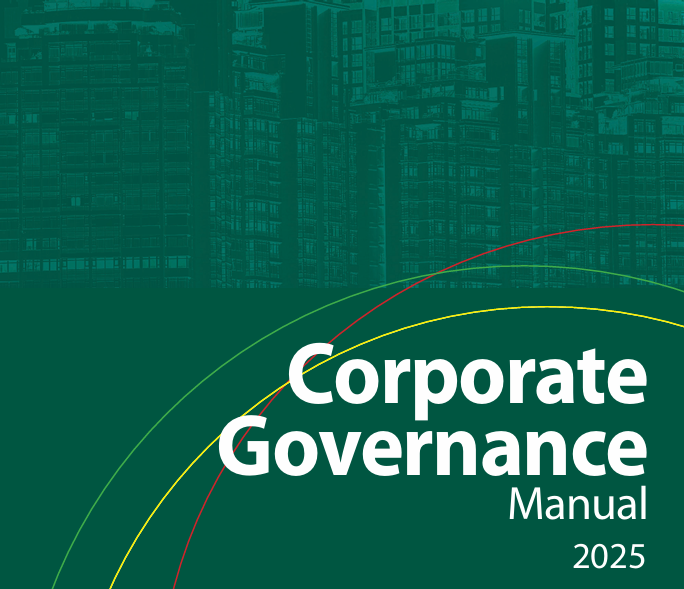
This Manual provides executives, and shareholders of Vietnamese public companies with a comprehensive summary of the corporate governance framework and practices prevalent in Viet Nam today. Importantly, this Manual also features international best practices and knowledge to serve as a practical toolkit to support companies in their corporate governance journey. This 2025 edition of the Manual provides readers with important updates from the fields of global corporate governance best practices and Viet Nam’s legislative environment, including:

  • A fresh overview of the legislative and regulatory requirements related to corporate governance and internationally recognized corporate governance principles.

  • Recommendations on how to fulfill the evolving governance obligations of public and listed companies.

  • Practical examples of how corporate governance standards can be implemented in today’s environment, and guidance for executives and directors in meeting their obligations with respect to the governance of the enterprise.

  • General outlines of authorities, obligations, and procedures of the governing bodies of public and listed companies.

This Manual also provides government officials, lawyers, judges, investors and others with a framework for assessing the level of corporate governance practices in Vietnamese and Viet Nam-based companies. Finally, it serves as a reference tool for educational institutions that will train the next generation of Vietnamese managers, investors, and policy makers on good corporate governance practices.

Read more>> CG-Manual-2025_EN_Full_FINAL

VIETNAM RETAIL FOOTFALL TRAFFIC ANALYSIS

0


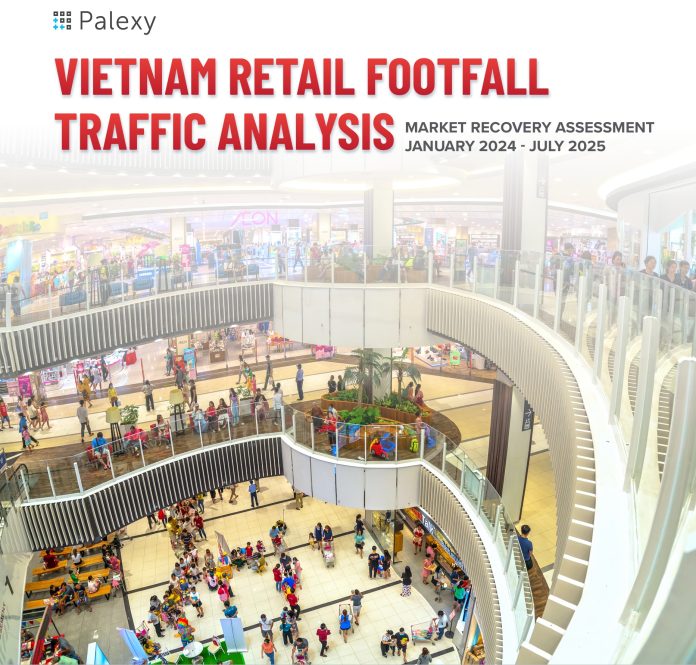
The report analyzes footfall data from over 2,000 non-essential retail stores across Viet Nam between January 2024 and July 2025, showing a strong market recovery after a difficult 2024.

  • Overall market growth: +11.3% by July 2025.

  • Main driver: Government actions against counterfeit and untaxed goods boosted legitimate retail performance.

  • Central region leads with +17% growth, supported by tourism recovery and strong enforcement.

  • Southern and Northern regions also show solid double-digit growth (~+10%).

  • Both street and mall stores report similar recovery rates (~+12%).

  • Since March 2025, growth has been steady, indicating restored consumer confidence.

Outlook: Retail growth is expected to remain high (8–12%) through late 2025.
Key success factors: Continued regulation enforcement, consumer trust, economic stability, and innovative retail experiences.

Read more>> Palexy Retail Footfall Report, Jan–Jul 2025.

Corporate Governance Manual 2025

0

This Manual provides executives, and shareholders of Vietnamese public companies with a comprehensive summary of the corporate governance framework and practices prevalent in Viet Nam today. Importantly, this Manual also features international best practices and knowledge to serve as a practical toolkit to support companies in their corporate governance journey. This 2025 edition of the Manual provides readers with important updates from the fields of global corporate governance best practices and Viet Nam’s legislative environment, including:

  • A fresh overview of the legislative and regulatory requirements related to corporate governance and internationally recognized corporate governance principles.

  • Recommendations on how to fulfill the evolving governance obligations of public and listed companies.

  • Practical examples of how corporate governance standards can be implemented in today’s environment, and guidance for executives and directors in meeting their obligations with respect to the governance of the enterprise.

  • General outlines of authorities, obligations, and procedures of the governing bodies of public and listed companies.

This Manual also provides government officials, lawyers, judges, investors and others with a framework for assessing the level of corporate governance practices in Vietnamese and Viet Nam-based companies. Finally, it serves as a reference tool for educational institutions that will train the next generation of Vietnamese managers, investors, and policy makers on good corporate governance practices.

Read more>> CG-Manual-2025_EN_Full_FINAL

Doing business in the UAE

0
Doing business in the UAE

The United Arab Emirates (UAE) is a federation of seven emirates that includes important business
hubs like Dubai and Abu Dhabi. Together, these emirates offer a range of advantages for businesses
looking to expand their operations or establish a new presence in the region. In fact, the UAE has
emerged as a major business location that connects the East and the West, with its strategic
location at the crossroads of Europe, Asia, and Africa.

Doing business in the UAE

The key advantages of doing business in the UAE, include:
▪ Zero/low tax environment
▪ Ease of doing business: According to the World Bank’s 2022 Doing Business report, the
UAE ranks 16th globally for ease of doing business. Highlighting the country’s efficient
business registration process, streamlined procedures for construction permits and
strong protections for investors.
▪ World-class infrastructure. Dubai International Airport is the world’s busiest airport in
terms of international passenger traffic.
▪ Diversified and skilled workforce
▪ Growing economy: The UAE’s economy has been growing steadily, with a $421.14 billion
in 2021 according to the International Monetary Fund.
▪ Easy process to obtain resident visa

Please refer to the attached report for detailed information>>Doing business in the UAE

Future of Jobs Report 2025: INSIGHT REPORT JANUARY 2025

0
Future of Jobs Report 2025- INSIGHT REPORT JANUARY 2025

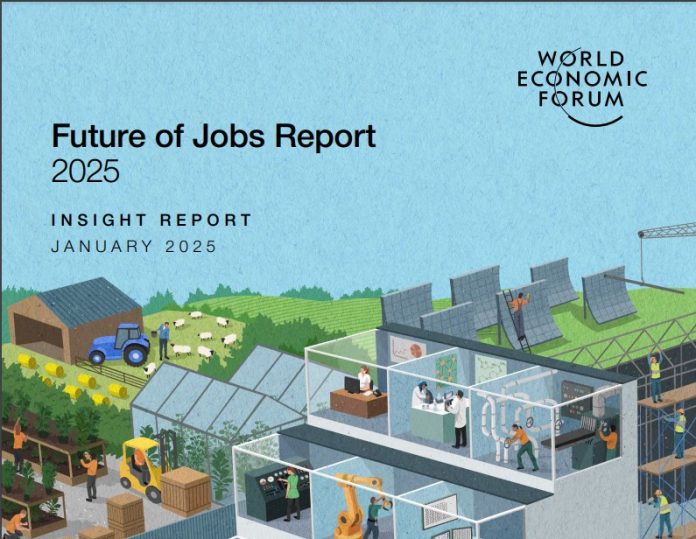
Over the past decade, the World Economic Forum’s bi-annual Future of Jobs Report has followed evolving technological, societal and economic trends to understand occupational disruption and identify opportunities for workers to transition to the jobs of the future.

As we enter 2025, the landscape of work continues to evolve at a rapid pace. Transformational breakthroughs, particularly in generative artificial intelligence (GenAI), are reshaping industries and tasks across all sectors. These technological

advances, however, are converging with a broader array of challenges, including economic volatility, geoeconomic realignments, environmental challenges and evolving societal expectations. In response, this fifth edition of the Future of Jobs Report expands its focus, offering a comprehensive analysis of the interconnected trends shaping the global labour market.

Future of Jobs Report 2025- INSIGHT REPORT JANUARY 2025

Central to the report is a unique dataset derived from an extensive survey of global employers. This year’s edition captures the perspectives of over 1,000 employers – representing more than 14 million workers across 22 industry clusters and 55 economies – providing unparalleled insights into the emerging jobs landscape for the 2025-2030 period. This report would not be possible without their openness to contributing their views and insights, and we sincerely thank them all. We greatly appreciate, too, the support of our survey partners, which have enhanced the report’s geographical coverage.

These perspectives are further enriched by research collaborations and data partnerships with ADP, Coursera, Indeed and LinkedIn, whose innovative data and analysis complement the survey findings. This publication has been made possible by the dedication and expertise of its project team: Till Leopold, Attilio Di Battista, Ximena Játiva, Shuvasish Sharma, Ricky Li and Sam Grayling, alongside the wider team at the Centre for the New Economy and Society.

The disruptions of recent years have underscored the importance of foresight and collective action.

We hope this report will inspire an ambitious, multistakeholder agenda – one that equips workers, businesses, governments, educators and civil society to navigate the complex transitions ahead.

Please refer to the attached report for detailed information>> Future of Jobs Report 2025: INSIGHT REPORT JANUARY 2025

New regulation on real estate transfer in Vietnam

0

Recently, the real estate market has started to become more active after a gloomy period of the investment and business market due to the impact of the Covid-19 pandemic and tends to rocket more strongly in the post-Covid-19 period, thanks to many policies to support and promote this market by the Government and other Competent Authorities. Real estate investment and business are also the fields that have significant and vital impacts on the country’s socio-economic development. Decree No. 76/2015/ND-CP, dated September 10, 2015, of the Government detailing the implementation of a number of articles of the Law on Real Estate Business 2014 (“Decree 76”) after its promulgation, in The application process has appeared numbers of obstacles, existing and up to now many regulations are no longer suitable with needs and reality. On January 6, 2022, the Government issued Decree No. 02/2022/ND-CP detailing the implementation of a number of articles of the Law on Real Estate Business (Decree 02) effective from January 1. 3/2022 Replacing Decree No. 76/2015/ND-CP. This article will summarize and analyze some points to note in real estate transfer activities under the new regulations.

  1. Regulations on conditions for the transfer of contracts for purchase and sale or lease-purchase of future houses and for transfer of lease-purchase contracts for existing houses and constructions:
  • The transfer of contracts for purchase and sale of houses, lease-purchase of houses to be formed in the future, and of lease-purchase contracts of existing houses and construction works are not applicable to social housing purchase and sale contracts. This condition is supplemented in accordance with the provisions of Article 59 of the Law on Real Estate Business 2014, as well as in line with the systematic and unified regulations guiding the transfer of purchase and sale contracts, lease-purchase for future houses, where previously Decree 76 did not have specific guidelines.
  • Detailing and supplementing specific conditions for cases in which it is permitted to transfer contracts of purchase and sale, lease-purchase of houses, and construction works, including:

– Having a sale, purchase, or hire purchase contract made according to the provisions of Article 6 of Decree 02; In case the parties signed a contract before the effective date of this Decree, the signed contract is vital;

 – Those who have not yet submitted dossiers to request competent state agencies to issue certificates of land use rights and ownership of houses and other land-attached assets;

– Contracts for sale, purchase, lease-purchase of houses and construction works must be free of disputes or lawsuits;

– Houses and constructions work under purchase and sale or hire-purchase contracts and are not subject to distraint or mortgage to secure the performance of obligations as prescribed by law unless otherwise agreed by the mortgagee.

– The transfer of contracts for purchase, sale, lease purchase of houses, and construction works shall be carried out for the entire contract. In case of purchase, sale, lease-purchase of many houses or construction works under the same contract and the parties wish to transfer each house or construction work, the transferor must reach an agreement with the investor to amend the contract for sale, purchase, lease purchase of a house or construction work or sign an appendix to the contract before transferring the contract in accordance with the provisions of this Decree.

  1. Regulations on the transfer of all or part of real estate projects:
  • For the following real estate projects, the transfer shall be carried out in accordance with the provisions of the law on investment:
    • Real estate projects approved by investors according to the provisions of the Law on Investment in 2020
    • Real estate projects are granted investment registration certificates in accordance with the provisions of the Law on Investment in 2020.
  • For real estate projects that are not mentioned above, the transfer shall be carried out in accordance with the provisions of the Law on Real Estate Business and Decree 02.

It is understood that only real estate projects that are subject to investor approval) and have been granted an Investment Certificate under the Investment Law 2020 will apply the provisions of the law on investment; and all other cases of real estate projects other than the above two cases will apply according to the provisions of the Law on Real Estate Business and Decree 02. This provision is consistent with and consistent with Clause Article 46 of the Law of Investment 2020, ensuring the separation and clarity on the cases of project transfer will apply in accordance with the provisions of the Law on Investment; and other issues will apply according to the provisions of the Law on Real Estate Business.

Social insurance and Medical insurance scheme of foreign workers in Vietnam

0

Question: Dear lawyers, currently, my company has employees who are foreign workers. However, I still haven’t fully understood the social insurance and health insurance benefits that foreign workers are entitled to. Specifically: sickness, retirement, social insurance for the elderly and occupational accidents, what are the benefits and compensations? Hope you can help me with answer.


Answer:

SB Law Company Limited thank you for your interest in our legal consulting services. Regarding your question, we would like to consult the following:Sổ tay ăn dặm | Mèo phong thuỷ | Bảo Châu Sport 

  1. About health insurance


1.1. Benefits and compensations for sickness scheme.

Article 6 of Decree No. 143/2018/ND-CP has regulations on sickness scheme for foreign workers as follows:

(i)      Condition for Sickness Scheme

–       Having an illness or an accident that is not an occupational accident which made the worker can not work; and have the certification of a competent medical examination facility according to regulations of the Ministry of Health.

In case of illness or accident (that made the worker can not work) happened due to self-destruction of health, drunkenness or use of narcotics or drug precursors according to the list prescribed by the Government, they are not entitled to the sickness scheme.

–       Having to take leave from work to take care of sick children under 07 years old and certified by a competent medical examination facility.

(ii)    Sickness Scheme period

–         Working in normal conditions, workers are entitled to 30 days if they have paid social insurance premium for less than 15 years; 40 days if the payment is from full 15 years to less than 30 years; 60 days if paid for full 30 years or more;

–        Do heavy, toxic, dangerous occupations or jobs or work particularly hard, toxic or dangerous on the list promulgated by the Ministry of Labor, War Invalids and Social Affairs and the Ministry of Health, or work in places where regional allowance rate is at 0.7 or higher, they are entitled to 40 days if they have paid social insurance premium for less than 15 years; 50 days if the payment is from full 15 years to less than 30 years; 70 days if paid for full 30 years or more.

–        Employees who take sick leave due to illness on the List of diseases requiring long-term treatment promulgated by the Ministry of Health are entitled to sickness scheme for up to 180 days, including public holidays, Lunar New Year holidays and weekly rest days.

–        In case that the workers are getting the sickness scheme for a full period of sickness scheme in a year but not yet recovering, workers are entitled to convalescence and health rehabilitation.

(iii)  Compensations of sickness scheme.

–       Sick foreign workers are entitled to a maximum of 75% of the salary on which social insurance are based in the preceding month before leaving.

In case that the worker has just started to work or the worker who has previously paid social insurance premium, and then has his/her working time interrupted made he/she must leave work to get sickness scheme within the first month of their return, the compensation is equal to 75% of the salary of that month on which social insurance are based.

–       Employees who continue to get the sickness scheme, specified at Point b, Clause 2, Article 26 of the Law on Social Insurance 2014, shall get these following allowances:

  1. a) Equal to 65% of the salary on which social insurance are based of the month immediately preceding the leave, if the employee has paid social insurance premium premiums for 30 years or more;
  2. b) Equal to 55% of the salary on which social insurance are based of the month immediately preceding the leave, if the employee has paid social insurance premium for 15 years to less than 30 years;
  3. c) Equal to 50% of the salary on which social insurance are based of the month immediately preceding the leave, if the employee has paid social insurance premium for under 15 years

–       Employees who continue to get the sickness scheme, specified at Clause 3, Article 26 of the Law on Social Insurance 2014, shall get a compensation equal to 100% of the salary on which social insurance are based of the month immediately preceding the leave.

–       One-day compensation is determined as the monthly sickness compensation divided by 24 days.

1.2. About retirement, pension and its compensation.

Article 9 of Decree No. 143/2018/ND-CP has regulations on retirement and pension scheme for foreign workers as follows:

(i)       Condition for pension:

When leaving work for full 20 years of paying social insurance premium or more, they will be entitled to a pension if they are in one of the following cases:

–         Male who reaches the age of 60, female who reaches the age of 55;

–        Male who reaches the age of 55 to 60, female who reaches the age of 50 to 55 and have full 15 years of working in heavy, hazardous or dangerous occupations or jobs or particularly heavy, hazardous or dangerous jobs on the list promulgated by the Ministry of Labor, War Invalids and Social Affairs and the Ministry of Health, or work in places where regional allowance rate is at 0.7 or higher;

–       Employees aged between 50 and  55 years old and have paid social insurance premium for 20 years or more, including 15 years of working in coal mining in underground mines;

–       People infected with HIV/AIDS due to occupational accidents.

(ii)    Compensation:

–       Monthly pension:

+ Employee’s monthly pension is determined by multiplying the rate of monthly pension by the average monthly salary on which social insurance are based.

+ The monthly pension rate of employees eligible for pension as prescribed in Article 54 of the Law on Social Insurance is determined as follows:

  • Employees who retire from January 1, 2016 to before January 1, 2018, the monthly pension rate is determined at 45%, corresponding to 15 years of paying social insurance premium, then for each year of paying social insurance premium, an additional 2% will be charged for men and 3% for women; up to 75%;
  • Female employees who retire from January 1, 2018 onward, the monthly pension rate is determined at 45% corresponding to 15 years of paying social insurance premium, then for each year of paying social insurance premium, an additional 2% will be charged, up to 75%;
  • Male employees who retire from January 1, 2018 onward, the monthly pension rate is determined at 45% corresponding to years of paying social insurance premium by the table below, then for each year of paying social insurance premium, an additional 2% will be charged, up to 75%.

–       Single premium policy:

+ Employees who have paid social insurance premium for a period of time higher than the number of years corresponding to the pension enjoyment rate by 75%, when they retire, in addition to their pensions, they will also get a lump-sum allowance.

+ Lump-sum allowance is determined by number of years of paying social insurance premium which is higher than the number of years corresponding to the pension rate of 75%. For each year of paying social insurance premium, it is determined as 0.5 months of the average monthly salary went for social insurance premium.

  1. About retirement plan


2.1. About Social Insurance for elderly.

Pursuant to Clause 2, Article 2 of Decree No. 143/2018/ND-CP, there are regulations on compulsory social insurance for foreign workers working in Vietnam as follows:

“2. Employees specified in Clause 1 of this Article are not eligible to participate in compulsory social insurance as prescribed in this Decree when falling into one of the following cases:

  1. a) Moving within an enterprise according to the provisions of Clause 1, Article 3 of the Government’s Decree No. 11/2016/ND-CP dated February 3, 2016 detailing the implementation of a number of articles of the Code Labor for foreign workers working in Vietnam;
  2. b) The employee has reached the retirement age as prescribed in Clause 1, Article 187 of the Law on Labor”.

Referring to Clause 2, Article 169 of the Labor Code 2019 stipulating that from 2021, the retirement age of employees in normal working conditions is exact 60 years and 03 months for male employees and exact 55 years and 04 months for female employees; after that, each year increases by 03 months for male employees and 04 months for female employees.

Thus, according to the mentioned regulation for foreign workers who have reached the retirement age in 2021, for men who are exact 60 years old and 3 months, for women who are exact 55 years old and 4 months old, they will not be subject to compulsory social insurance participation.

2.2 About social welfare and compensation.

(i)  Social welfare’s targets.

According to Clause 5, Article 5 of Decree 20/2021/ND-CP, the elderly will be entitled to a monthly social welfare if they fall into one of the following cases:

  1. a) The elderly are poor households, have no people with obligations and rights to serve them or have people with obligations and rights to take care of them, but these people are receiving monthly social welfare;
  2. b) Elderly people from exact 75 years old to 80 years old belonging to poor households, near-poor households not specified at Point a of this Clause are living in communes and villages in ethnic minority areas and in mountainous areas and particularly difficult;
  3. c) Persons aged full 80 years or older who are not specified at Point a of this Clause and do not have a monthly pension, social insurance allowance or monthly social allowance;
  4. d) The elderly belong to poor households, do not have anyone with obligations and rights to take care of them, do not have the conditions to live in the community, and are eligible for admission to social assistance establishments but have someone to take care of them in the community.

(ii) Compensation:

The subjects specified in Article 5 of this Decree are entitled to a monthly social welfare equal to the standard level of social assistance specified in Article 4 of this Decree multiplied by the corresponding coefficient specified as follows:

For the subjects specified in Clause 5, Article 5 of Decree 20/2021/ND-CP:

– Rate 1.5 for subjects specified at Point a, Clause 5, from exact 60 to 80 years old;

– Rate 1.5 for subjects specified at Point a, Clause 5, from exact 80 years old;

– Rate 1.0 for subjects specified at Point b and c, Clause 5;

– Rate 3.0 for subjects specified at Point d, Clause 5.

The standard social welfare level applied from July 1, 2021 is VND 360,000/month.

  1. About the occupational accident insurance and compensation.


Article 8 of Decree No. 143/2018/ND-CP has regulations on the occupational accident insurance for foreign workers as follows:

(i)       Conditions:

Employees participating in occupational accident and occupational disease insurance are entitled to the occupational accident scheme when fully meet the following conditions:

  1. Having an accident in one of the following cases:
  2. a) At the workplace and during working hours, even when performing necessary daily needs at the workplace or during working hours prescribed by the Law on Labor and internal regulations the company, including breaks, mid-shift meals, in-kind refreshments, menstrual hygiene, bathing, breastfeeding, toileting;
  3. b) Outside the workplace or outside working hours when performing work at the request of the employer or the person authorized by the employer by labor management documents;

On the route from the place of residence to the place of work or from the place of work to the place of residence within a reasonable time and route;

  1. Working capacity decrease from 5% or more due to an accident specified in Clause 1, Article 45 of the Law on Occupational Safety and Health;
  2. An employee is not entitled to the scheme paid by the Insurance Fund for Occupational Accidents and Diseases if it falls under one of the causes specified in Clause 1, Article 40 of the Law on Occupational Safety and Health.

(ii)    Occupational accident insurance compensation

– Lump-sum allowance (decreased from 5% – 30%): 5% reduction is entitled to 05 times the base salary, for every additional 1% decrease, 0.5 times the base salary.

– Monthly allowance (decreased from 31% or more): 31% reduction is entitled to 30% of the base salary, for every additional 1% decrease, 2% of the base salary.

(iii)  Living aids, orthopedic devices

Depending on the condition of the injury, the function of the body which is affected.

(iv)    Service allowance (in addition to the monthly allowance)

The compensation level is equal to the base salary if there is a reduction of 81% or more but suffers from spinal paralysis, blindness in both eyes, amputation, paralysis of two limbs or mental illness.

(v)     Conserve and recover health after treating an injury or illness:

– Maximum: 10 days off;

– Getting 25% of the base salary/day if staying at home; 40% of the base salary/day if staying at a centralized facility.

(vi) Allowance for death due to work accident or occupational disease:

One-time allowance equal to 36 times the base salary.


Regulation on import and wholesale and retail of new and used cars in Vietnam

0

Question: We are the FDI in Vietnam, we would like that SBLAW may support the Company with the supplement of Company’s business lines of import and wholesale and retail of new and used cars (hereinafter is referred to as “Business Lines”).

Answer: SBLAW would like to advise as follows:

I. OUR PRELIMINARY COMMENTS

1. According to Article 15 Decree 116/2017/ND-CP dated 17th October 2017 regarding requirements for manufacturing, assembly and import of automobiles and trade in automobiles and warranty and maintenance services, the automobiles importer must obtain a license for automobiles import. For this purpose, following requirements must be satisfied:Sổ tay ăn dặm | Mèo phong thuỷ | Bảo Châu Sport 

  • To have an automobile warranty and maintenance facility owned or leased by the Company, or belonging to the company’s authorized dealer network;
  • To have a written certification or document proving that the Company is authorized to act on behalf of the foreign automobile manufacturer and assembler to issue a recall order for imported cars in Vietnam;

2.According to Article 21 of Decree 116/2017/ND-CP, for carrying out motor vehicle, warranty/maintenance services, the service provider must obtain a certificate of eligible motor vehicle warranty/maintenance center. The license shall be granted subject to following requirements:

  • The factory is built on the land area under legal ownership of the trader.
  • The premises and factory ensure warranty/maintenance services.
  • There are areas for reception, transfer, maintenance, repair, factory inspection, operation building, warehouse storing automotive parts and accessories and motor vehicle wash to meet the workload.
  • There are adequate facilities for motor vehicle warranty/maintenance services. Measurement facilities used for motor vehicle warranty/maintenance services comply with regulations of law on measurement.
  • The equipment used to diagnose engines and specifications of motor vehicles (in case of motor vehicles having electronic control units) is suitable for the motor vehicle classes that the center in charge. Diagnosing equipment software complies with regulations on intellectual property rights.
  • Personnel and quality management system ensure the quality of motor vehicle warranty/maintenance services.
  • The aforesaid requirements shall satisfy requirements for premises, facilities, personnel and quality management system for motor vehicle maintenance and repair centers for each corresponding motor vehicle class mentioned in the national standard TCVN 11794 on motor vehicle warranty and maintenance centers and equivalent vehicles.
  • Commitments are made to technical support and provision of automotive parts and accessories for motor vehicle warranty/maintenance services of: (i) domestic manufacturers/assemblers (if providing warranty/maintenance services for domestic manufacturers/assemblers); or (ii) Foreign manufacturers/assemblers (if providing warranty/maintenance services for motor vehicle importers).
  • Accordingly, in order to register importation, retail and wholesale distribution activities, the Client shall be required to undergo the following steps:

a) Step 1: Amend the Investment Registration Certificate (“IRC”)

  • At present, activity of import, wholesale and retail of new and used cars has not yet been recorded in the IRC of Client. Therefore, the Client need to add this activity into the project objectives in the IRC at first.

b) Step 2: Supplementing the Business Lines in the Enterprise Registration Content of the Company

  • We shall apply for amendment of enterprise registration contents to add business lines of import, wholesale and retail of new and used cars into the list of business lines of Company.

c) Step 3: Obtaining the Business License for the wholesale of automobiles

  • Retailing involving selling goods to individuals, households, other organizations for consumption purpose.

  • According to Article 5.1(c) of Decree 09/2018/ND-CP dated 15th January 2018 guiding Law on commerce and the Law on foreign trade management regarding sale of goods and other activities directly related to sale of goods of foreign investors and foreign-invested enterprises in Viet Nam, a business license to be issued to a foreign-invested enterprise to perform the retail distribution right.

d) Step 4: Obtain License for the establishment of automobiles retail outlet

  • Retail outlet means the place where retailing activities is conducted.
  • According to Article 5.2 Decree 09/2018/ND-CP, a license for establishment of retail outlet is issued to a foreign-invested enterprise setting up a retail outlet.

e) Step 5: Obtain Certificate of eligible automobiles warranty and maintenance facility

In order to obtain the license for automobiles import, the Client is required to have an automobile warranty and maintenance facility. Then, the Client need to obtain Certificate of eligible automobiles warranty and maintenance facility for this facility.

f) Step 6: Obtaining the License for import of automobiles.


II.SCOPE OF WORK AND PERFORMANCE TIME

1.The expected roadmap for the licensing procedure can be described as follows:

Preparing the application dossier: We shall collect necessary information and documents from you. Upon receipt of necessary information and documents from you, we shall translate documents from English into Vietnamese and prepare the application dossier under the standard forms. The initial drafted application dossier shall be sent to you for your comments. Then, after updating the application dossier based on your comments, we shall obtain the preliminary comments from the competent authority and send the finalized application dossiers for you to sign and seal. We anticipate that this phase shall be completed within from 10 working days. The prepared documents shall then be sent to you for review, signing and seal.

Licensing procedure:

(i) Amending the Investment Registration Certificate: Within 02 working days from receipt of duly signed and sealed application dossier, we shall submit the application dossier to the competent authority. Within 20 working days from submission of application dossier to Licensing Agency, we shall obtain the amended Investment Registration Certificate for the Client.

(ii) Supplementing the business nines in the Enterprise Registration Content of the Company: Within 02 working days from receipt of the revised Investment Registration Certificate, we shall submit the application dossier for changing enterprise registration content to Licensing Agency. Within 05 working days from submission of application dossier to Licensing Agency, we shall obtain Confirmation on the change of Enterprise Registration Content for the Client.

(iii) Obtaining the Business License for the wholesale of automobiles: Within 02 working days from receipt of Confirmation on the change of Enterprise Registration Content, we shall submit the application dossier to the competent authority. Within 45 working days from submission of application dossier to Licensing Agency, we shall obtain Business License for the Client.

(iv) Obtaining License for the establishment of automobiles retail outlet: Within 02 working days from receipt of duly signed and sealed application dossier, we shall submit the application dossier to the competent authority. Within 45 working days from submission of application dossier to Licensing Agency, we shall obtain License for the establishment of automobiles retail outlet for the Client.

(v) Obtaining the Certificate of eligible automobiles warranty and maintenance facility: Within 02 working days from receipt of duly signed and sealed application dossier, we shall submit the application dossier to the competent authority. Within 40 working days from submission of application dossier to Licensing Agency, we shall obtain Certificate of eligible automobiles warranty and maintenance facility for the Client.

(vi) Obtaining the License for import of automobiles: Within 02 working days from receipt of duly signed and sealed application dossier, we shall submit the application dossier to the competent authority. Within 25 working days from submission of application dossier to Licensing Agency, we shall obtain License for import of automobiles for the Client.

For avoidance of doubts, we confirm that administrative procedures at competent state agencies may be lengthened in practice because the competent authority might consult with relevant departments and ministries before licensing. Under such conditions, SB Law will make reasonable efforts to accelerate work in order to receive licensing results as soon as possible.


III. Our scope of work:


Preparation of the application documents:

· Notifying application documents required in accordance with Vietnamese law;

· Drafting application documents required for submission purpose in English language;

· Liaising with you to discuss the draft application documents;

· Amending the application documents based on your comments;

· Obtaining preliminary comments from the licensing authority on the draft application documents;

· Finalizing the application documents following comments from the licensing authority; and

. Translating the final version of the application documents into Vietnamese for execution.

Licensing procedures:

· Submitting the application dossier to the licensing authority on your behalf;

· Monitoring and following up with the relevant authorities on the approval process;

· Keeping you updated on the developments and additional requirements, if any; and

· Assisting you in obtaining certificate and/or license.

Supporting policy for employees suspending work who face difficulties due to the outbreak of pandemic COVID-19

0

The regulations prescribed in Resolution 126/NQ-CP amending Resolution 68/NQ-CP in 2021 on supporting policies for employees and employers facing difficulties due to the outbreak of pandemic COVID-19.
Accordingly, supporting policy for employees suspending work is amended as follows:
– Employees working under labor contract are suspended due to reason prescribed in clause 3 Article 99 Labor Code; participating in compulsory social insurance up to the time right before suspending work and being in one of the following cases:
+ Must be treated for Covid-19, subject to medical quarantine, in lockdown areas or unable to go to work under principles of Directive 16/CT-TTg of the Prime Minister;
+ Because the employer has to suspend operations at the request of competent State agency or has a head office, branch, representative office, etc. in the area to take measures to prevent and control the epidemic according to the principles of the Directive 16/CT-TTg or rearrange production and labor for epidemic prevention and control:Sổ tay ăn dặm | Mèo phong thuỷ | Bảo Châu Sport 
In the duration of 14 consecutive days or more, from May 1st, 2021 to the end of December 31st, 2021.
Level of support is 01 million dong/person.
Currently, this regulation is applied merely to those who are subject to medical quarantine or in lockdown areas at the request of competent State Agency in a duration of 14 days or more, from May 1st, 2021 to the end of December 31st, 2021.
Resolution 126/NQ-CP takes effect from October 8th, 2021